Granular A gravel Toronto: The base layer your driveway actually needs
Every interlocking driveway or patio that holds up in Toronto starts with one decision made below the surface. That decision is the base layer. Get it right and your investment lasts 20 to 25 years. Get it wrong and you are relaying the whole thing inside of five. Granular A is the base material that professional contractors across the GTA rely on, and this guide from We Deliver Gravel explains exactly what it is, how deep it needs to go, and why it matters more than the pavers you see on top. If you are already planning your project and need gravel delivery in Toronto, knowing the right base material before you order saves you time, money, and a lot of headaches down the road.
What is Granular A gravel?
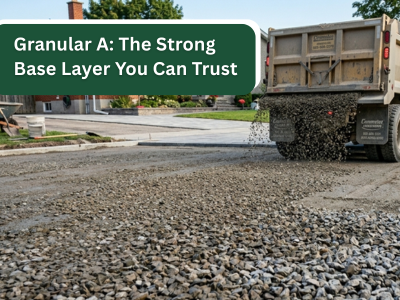
Granular A is a crushed, angular aggregate made from limestone or granite. It is graded to a specific size range, typically passing through a 26.5 mm sieve, and it includes a controlled mix of coarser chips and fine particles. That combination of sizes is exactly what gives Granular A its strength. When compacted with a plate compactor, the different particle sizes lock together and form a dense, load-bearing layer that resists movement even under heavy vehicle traffic.
It is commonly called Granular A base material, road base gravel, or compactable base aggregate depending on who you are talking to, but it all refers to the same engineered product that meets Ontario Provincial Standard specifications.
Why is Granular A specified for interlocking driveways in Toronto
Toronto’s “Sponge City” permeable surface bylaws are pushing more contractors and homeowners toward open-base paver systems that allow stormwater to filter into the ground rather than run off into storm drains. Granular A is one of the core materials in both traditional and permeable base systems because it compacts tightly, handles load transfer from vehicles, and still allows controlled drainage when the system is designed for it.
Ontario’s freeze-thaw cycle is one of the harshest tests any base material faces. Without a proper Granular A base, water gets trapped beneath pavers, freezes, expands, and lifts the entire surface. A correctly installed Granular A base eliminates that problem by giving your installation a stable, frost-resistant foundation. This is not just best practice. It is the standard that protects your project through GTA winters year after year.
How does Granular A compare to other base materials?
- Granular A vs Crusher Run: Crusher Run is sometimes used as a cheaper alternative. It compacts adequately for light-duty applications, but it typically has less standardized gradation than Granular A and does not perform as consistently under heavy driveways or in high-moisture conditions. For a standard residential driveway in Toronto, Granular A is the specified material, not Crusher Run.
- Granular A vs Granular B: Granular B is a coarser, less processed aggregate used as a subbase below Granular A in deep excavation projects or in areas with poor subgrade soil. On most residential projects in the GTA, you will see Granular A alone. On commercial projects or sites with significant bearing issues, you may see Granular B underneath and Granular A on top.
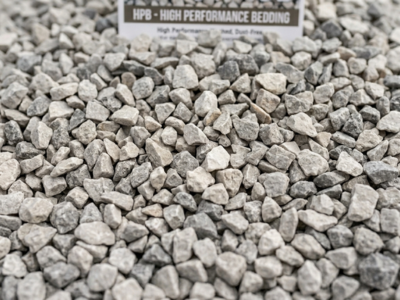
- Granular A vs HPB (High Performance Bedding): These two materials serve completely different roles. Granular A is the base. HPB is the thin bedding layer set on top of the base, directly under the pavers. You need both for a proper interlocking installation. HPB is washed and drains freely; Granular A is compacted and load-bearing. They work together, not interchangeably. If you want a deeper look at how HPB works and when to use it, our full guide breaks it down in plain language.
How deep should Granular A be under interlocking pavers?
Depth depends on what the surface will carry:
- Pedestrian patios and walkways: A minimum of 4 inches (100 mm) of compacted Granular A is standard for foot traffic areas. On softer soils, 6 inches is safer.
- Residential driveways: Most gravel suppliers in Toronto and contractors specify 6 to 8 inches (150 to 200 mm) of compacted Granular A for a single or double car driveway that carries regular passenger vehicle loads.
- Heavy-use driveways or commercial surfaces: Anything accommodating trucks, RVs, or heavy equipment should have 8 to 12 inches of Granular A, sometimes over a Granular B subbase.
Not sure how many tonnes or cubic yards your project needs? The gravel calculator guide walks you through the math step by step so you order the right amount the first time.
Common mistakes that lead to driveway failure
- Skipping compaction layers: Granular A must be compacted in lifts of no more than 4 inches at a time. Dumping 8 inches and running one pass over it leaves the lower half loose and prone to settling. This single mistake is responsible for more sunken and uneven interlock surfaces across the GTA than any other installation error.
- Using the wrong material as a base: Sand, topsoil, and Limestone Screenings are not base materials. Using them as a substitute for Granular A is one of the most common reasons interlocking driveways fail within a few years. Screenings have their place as a finish layer on walkways, but they are not engineered to carry vehicle loads or resist frost heave the way Granular A is. If you want to understand how different aggregate choices affect drainage, the sand vs gravel drainage guide explains the key differences.
- Not accounting for subgrade conditions: Toronto’s clay-heavy soil retains moisture and shifts seasonally. On sites with poor drainage or soft subgrade, excavating deeper and installing Granular A over a geotextile fabric is essential. Skipping this step on a clay-heavy lot is one of the fastest ways to end up with a base that moves.
We deliver wherever you are across Toronto and the GTA
We Deliver Gravel serves homeowners and contractors across Toronto, Vaughan, and the entire Greater Toronto Area. Whether your project is in Queen West, Scarborough, Etobicoke, The Beaches, Willowdale, High Park, Don Mills, Leslieville, or anywhere else across the city, we get your materials to the right place at the right time.
We know GTA soil conditions, we know what Ontario freeze-thaw cycles do to a poorly built base, and we know what it takes for an interlocking installation to last. That local knowledge comes with every delivery. For properties where a standard dump truck cannot get close enough, our stone slinger service places Granular A and other aggregates precisely where you need them, saving hours of manual wheelbarrow work on tight lots and narrow backyards.
We carry everything your project needs in one place. Whether you are building a paver base with Granular A, finishing with HPB or Limestone Screenings, setting pavers with Concrete Sand, or adding a decorative touch with Pea Gravel or River Rock, you can order everything online and have it scheduled for delivery at a time that works for your project.
Getting Granular A delivered to your project
Spring is peak installation season across the GTA. If your interlock project is booked for April, May, or June, ordering your Granular A now means your materials are ready when your crew is.
We Deliver Gravel supplies Granular A in Toronto and across the GTA in bulk loads delivered directly to your driveway, backyard, or job site. Whether you prefer to place your order online or speak with someone directly, getting started is simple. Call us at 647-868-2447 or get in touch, and our team will help you confirm the right quantity and lock in a delivery time that works for your schedule.
We serve homeowners and contractors anywhere across the Greater Toronto Area, and we do it with the kind of fast, reliable gravel delivery in Toronto that keeps your project moving.