
Sand vs. Gravel: Which Is Better for Drainage?
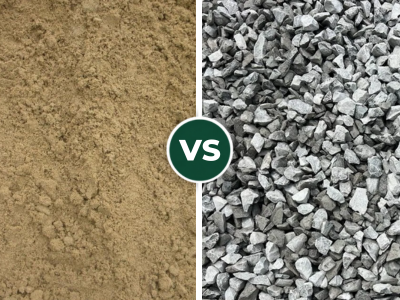 Water pooling on your lawn, a soggy garden bed, or a driveway that never quite dries out usually comes down to one thing: drainage. And when people ask us how to fix it, the question almost always lands on the same choice, should you use sand or gravel? Both move water, but they do it very differently, and picking the wrong one can turn a wet problem into a worse one.
We Deliver Gravel has been one of the trusted gravel suppliers in Toronto for years, moving both sand and gravel across the GTA every week, so here is the straight answer on which drains better, when to use each, and how they behave on our clay soil.
Why Drainage Is Important?
Before comparing the two, it helps to know why drainage matters so much. Poor drainage leaves water sitting around roots and foundations. For plants that means root rot, fungal disease, and slow decline. For structures it means frost heave, shifting, and long-term damage through our freeze-thaw winters. Good drainage keeps the balance of moisture and air that plants need, and keeps water away from the things water damages.
Drainage for driveways, patios and structures
Drainage is not just a garden issue. Roads, driveways, patios, and building foundations all rely on it to stay structurally sound. Water that collects under a driveway or against a foundation freezes and shifts through an Ontario winter, and that is what cracks slabs and heaves interlock over time. For those jobs the material under the surface matters as much as the surface itself, which is why base and drainage layers get chosen so carefully. If you are planning a driveway, our guide on driveway gravel suppliers in Toronto walks through building a base that lasts.
Sand vs gravel: how they stack up for drainage
| Factor | Sand | Gravel |
|---|---|---|
| Particle size | 0.05mm to 2mm, fine | 2mm to 75mm, coarse |
| Permeability | Good, but can compact over time | Excellent and long-lasting |
| Compaction risk | Compacts and can clog | Resists compaction |
| Best soil | Sandy or loamy soils | Clay and compacted soils |
| Typical use | Bedding, backfill, fine leveling | French drains, foundations, driveways |
How each material handles water
Sand is made up of fine particles, roughly 0.05mm to 2mm across. That fine texture lets water move quickly through soil, which helps in areas with a high water table or clay that holds water. The trade-off is that sand can compact over time and lose some of that drainage if it is not maintained, so it is often paired with gravel or a drainage system rather than used on its own.
Gravel has coarser particles, from about 2mm to 75mm. The gaps between the stones create open space and let water drain freely, and unlike sand, gravel resists compaction, so it keeps draining for the long term. That durability is why gravel shows up in French drains, foundation drainage, and septic systems across the GTA. This is also the answer to a question we hear a lot, does water drain better through sand or gravel? For fast, lasting drainage, gravel usually wins, while sand drains well but is more prone to packing down.
Which Do You Need?
The right choice comes down to your soil and what you are draining.
- For fast-draining sandy or loamy soils: sand gives already-decent drainage a boost. Our concrete sand is a common pick for bedding and fine leveling.
- For clay or compacted soils: gravel is more effective, because it creates air pockets and resists compaction. When drainage is the whole point, washed clear stone like 3/4 clear limestone is the go-to, since the fines are washed out and water passes straight through.
- For the best of both: a combination often works best, layered so you get rapid drainage from sand and long-term stability from gravel. And if you are wondering whether you can mix sand and gravel for drainage, yes, layering the two is a common and effective approach. Where you need a material that compacts firm rather than drains, limestone screenings are the opposite tool for the job, worth knowing so you do not use a draining stone where you actually want a solid base.
A few things to check before you order
- Match the material to your soil first. Clay that holds water leans toward gravel, while sandy soil can take sand.
- For pure drainage, choose a washed clear stone with no fines, so nothing clogs the gaps.
- Layer when it makes sense. A draining stone lower down with a finer layer on top handles a lot of problem sites.
- Work out your quantity before you buy. Our gravel calculator gives you a quick cubic-yard estimate, and you can check current rates on our gravel price list.
We deliver sand and gravel across Toronto and the GTA
We Deliver Gravel serves homeowners and contractors right across Toronto, Vaughan, and the entire GTA, from Scarborough and Etobicoke to Willowdale, Don Mills, High Park, and Leslieville. In Vaughan, we cover Woodbridge, Maple, Kleinburg, Thornhill, Concord, and the surrounding areas. We know GTA soil and exactly what Ontario winters do to a poorly drained base, and that knowledge comes with every order.
We also carry everything your drainage project needs in one place. From 3/4 Clear Limestone and Granular A for base and drainage layers to Concrete Sand for bedding, plus Pea Gravel and River Rock for decorative finishes, you can order it all online and schedule delivery at a time that suits your project.
Sort out your drainage, book Gravel Delivery in across Toronto and the GTA
Whether you are fixing a soggy lawn, building a patio base, or draining water away from a foundation, We Deliver Gravel makes gravel delivery in Toronto simple, getting the right material to your door without the guesswork. You can order online and schedule your delivery at a time that works for your project, and if you are still deciding between sand and gravel, call us at 647-868-2447. Our team will help you figure out which one suits your soil, how much to order, and when we can get it out to your site.
Related Posts
-
Red Crushed Brick: Where It Looks Best & Where to Skip It
October 13, 2026 -
What is brick sand (Play Sand)? Uses and when to use it
September 16, 2026 -
What is concrete sand? Uses, grades, and when to use it
August 18, 2026 -
HPB vs Limestone Screenings: Which is better for under patio stones?
July 21, 2026 -

Commercial gravel delivery in Toronto: What contractors and property managers need to know
June 23, 2026